
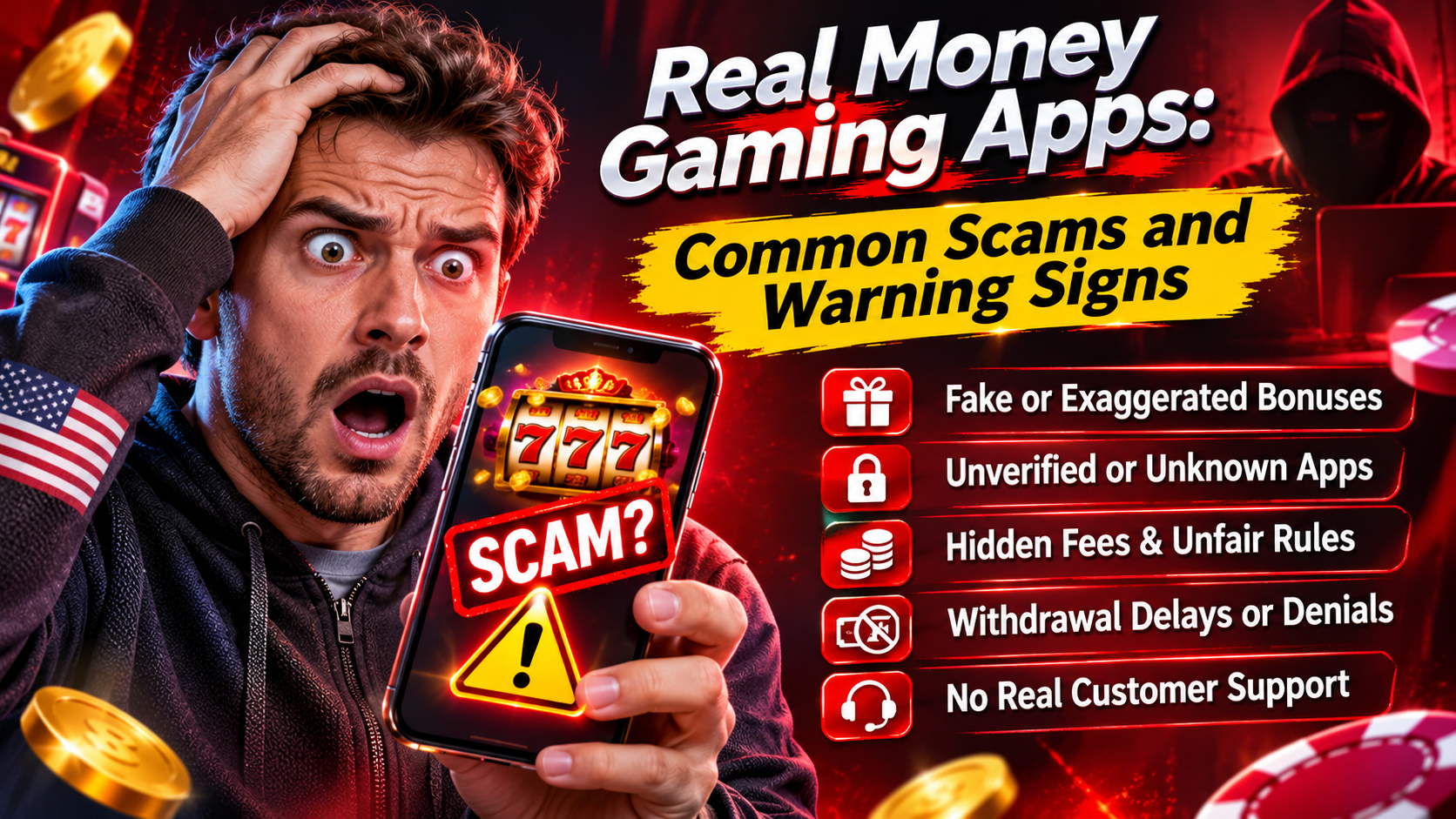
21+ Audience | Educational Content | Responsible Gaming Awareness
Disclaimer: This article is for informational and educational purposes only, intended for adults aged 21 and older. It does not promote gambling or guarantee earnings. Gaming laws and age requirements vary across US states.
Imagine downloading a gaming app that promises exciting rewards. You create an account, play a few games, and watch your balance increase. Everything seems legitimate until you request a withdrawal.
Suddenly, the platform asks for an unexpected processing fee. Customer support stops responding, and your supposed winnings remain inaccessible.
Unfortunately, situations like these can indicate online gaming fraud.
As real money gaming apps become increasingly visible, understanding common scams is essential for anyone exploring online casino-style entertainment.
Whether you're interested in slots, fish table games, or reward-based gaming, recognizing warning signs can help protect your money and personal information.
What Are Real Money Gaming Apps?
Real money gaming apps are digital platforms involving monetary wagers, prize-based competitions, or activities offering potential financial rewards.
Popular categories include online slots, poker, blackjack, fish shooting games, and competitive mobile games.
However, not every app advertising cash rewards operates under the same rules.
Some provide entertainment-only virtual credits, while others involve monetary wagering or promotional rewards with specific eligibility conditions.
Understanding these differences matters because a displayed gaming balance doesn't automatically represent withdrawable money.
1. Fake Gaming Apps Promising Guaranteed Winnings
Have you ever encountered an advertisement claiming you can earn hundreds of dollars daily simply by playing games?
Such promises deserve skepticism.
Fraudulent gaming applications may advertise guaranteed income, unrealistic rewards, or supposedly risk-free opportunities.
Some even display fake earnings to encourage users to make deposits or provide sensitive information.
Casino-style games involve uncertain outcomes, and no strategy guarantees financial returns.
Before trusting an application, investigate its publisher, business identity, and official terms.
2. Withdrawal Scams and Unexpected Fees
One of the biggest warning signs involves suspicious withdrawal requests.
Imagine an application displaying a $500 balance. When you attempt to withdraw it, customer support demands another $100 to unlock the payment.
That's a serious red flag.
Fraudulent platforms may create fake balances and request additional payments for supposed taxes, account verification, or processing fees.
Legitimate services may have published fees and identity-verification requirements, but unexpected demands for additional payments should raise concerns.
Never assume a displayed balance guarantees cash redemption.
3. Fake Websites and Copycat Gaming Platforms
Scammers sometimes create websites resembling recognizable gaming brands.
These copies may feature familiar logos, similar colors, and website addresses containing minor spelling differences.
For example, a fraudulent website might add an extra letter to a legitimate domain name.
Before signing in, carefully verify the website address and identify the actual operator.
Avoid unfamiliar links received through unsolicited messages.
Remember, professional website design and HTTPS encryption don't automatically prove legitimacy.
4. Suspicious Requests for Personal Information
Account security should always be a priority.
Some fraudulent applications request unnecessary access to contacts, messages, photographs, or financial information.
Others impersonate support representatives and ask users to share passwords or verification codes.
Never disclose your password or one-time security code through chat.
Use strong passwords, enable multifactor authentication where available, and review the application's privacy policy.
If a support representative requests sensitive login credentials, stop communicating and contact the provider through an independently verified channel.
5. Unverified Licensing and Legal Claims
Online gaming regulations vary throughout the United States.
Some states authorize certain forms of regulated real-money casino gaming, while others restrict or prohibit them.
Be cautious when an application claims to be legal nationwide without providing verifiable evidence.
A legitimate operator should clearly identify its business and any applicable regulatory authorization.
Players should verify licensing claims through official state gaming regulators.
An app being available for download doesn't automatically mean participation is legally permitted in your location.
6. Fake Reviews and Misleading Promotions
Online reviews can influence which gaming applications people trust.
Unfortunately, scammers sometimes use fabricated testimonials, manipulated screenshots, and misleading payment confirmations.
Have you noticed reviews repeatedly promising instant withdrawals or guaranteed profits?
Treat those claims cautiously.
Instead of relying entirely on promotional comments, look for independent information, transparent terms, and verifiable business details.
How to Protect Yourself From Gaming App Scams
Before registering with any gaming application, follow these simple precautions:
- Verify the official publisher and website.
- Check licensing claims through regulatory sources.
- Review payment and withdrawal conditions.
- Avoid guaranteed-income advertisements.
- Never share passwords or verification codes.
- Examine privacy policies and application permissions.
- Be cautious about unexpected payment requests.
If you suspect fraud, stop sending money, secure your accounts, and preserve relevant evidence.
Frequently Asked Questions
Are all real money gaming apps scams?
No. Some operate under applicable legal and regulatory requirements. However, users should independently verify platform authenticity and authorization.
Can fake gaming apps display false winnings?
Yes. Fraudulent applications may display fabricated balances to encourage additional payments.
Are real money gaming apps only for people aged 21 and older?
This article targets adults aged 21 and older. Actual legal minimum ages vary by state and gaming activity.
Can gaming apps guarantee winnings?
No. Casino-style games involve uncertain outcomes, and no legitimate strategy guarantees profits.
What should I do if a gaming app scams me?
Stop making payments, secure your accounts, contact your financial institution, preserve evidence, and report suspected fraud.
Responsible Gaming and Safety Notice
21+ Audience | Play Responsibly | No Guaranteed Winnings
Online gaming should be approached as entertainment, not a dependable source of income.
Monetary gaming involves financial risks, including the possibility of losing money. Establish personal limits and avoid chasing losses.
For gambling-related support in the United States, visit the National Council on Problem Gambling.
Educational Disclaimer: This article does not constitute financial or legal advice and does not endorse any specific gaming operator. Always verify platform authenticity, applicable laws, and age eligibility before participating.


Discussion · 0
No approved comments yet.
Join the conversation
Comments are reviewed before publication. Your email is never displayed.